Career — Gyu-hun Im · Full-stack · AI Product EngineerInterview Portfolio · 2026

I use AI,I verify AI,I improve AI.

For three years, I have developed public-sector and weather-data systems, reducing a SQL bottleneck from 15–20 seconds to about one second and designing collection, aggregation, and web features around the weather domain. Building on that experience, I developed AI products that record and verify evidence, stage state, and evaluation results across RAG and tool-calling workflows.

Across team projects and personal products, I have carried work from problem definition to deployment and operations through collaboration and hands-on implementation.

Name
Gyu-hun Im
Role
Full-stack · AI Product Engineer
Career
2023.05 – present
Node.jssystemdsystemctljournalctlnpm CLITypeScriptYAMLCodex/HermesNext.jsPrismaPostgreSQLAuth.jsPostHogOpenAI APIREST APIAndroid IntegrationOpenAI Agents SDKpgvectorRAGDiscord APIRedisReact FlowZodLangSmith
3+ yrsPublic-sector and weather-data experience
15–20s → about 1sOracle statistics query response
Weather domain understandingIntegrated observation/aggregation cadence and missing-range handling criteria into batch architecture
2023.05Developer career started

60-second brief

Core competencies

Each competency is shown as a concrete system change. Follow a card to its verifiable evidence.

Selected evidence

Featured portfolio

Operational work on data bottlenecks and failures became a foundation for tracing evidence, state, and evaluation across AI runs.

01 / 03

Team project · Java · JSP · Oracle · MyBatis · Vanilla JavaScript

2024.07 – 2025.06

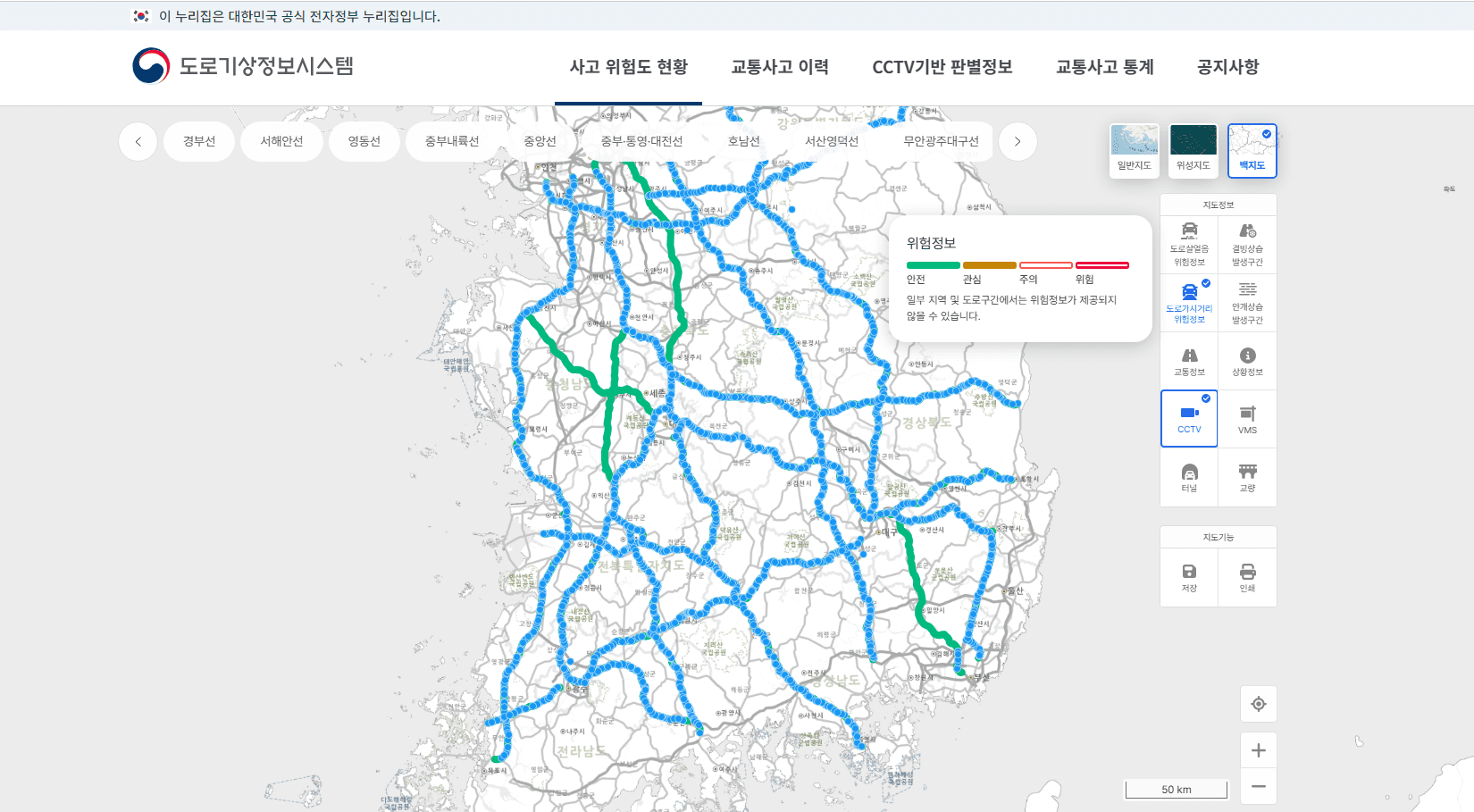
KMA Road Weather Information System — build

Built road-weather aggregation batches and statistics screens full stack, improving SQL, service-layer responsibilities, and shared JSP structure.

Owned scopeRequirements · backend and frontend implementation · testing · release support

Key outcomes
  • Reduced an Oracle statistics query from 15–20 seconds to about one second
  • Minute-level source data → 10-minute, hourly, and daily statistics
  • Shared JSP table, chart, search, and date handling
  • Vanilla JavaScript screen-state helper
Upfront design
  • Time-series aggregation — separate collection and reference times; explicit windows
  • Service layer — centralized processing and separated layer responsibilities
  • Screen state — one flow for search, reset, refetch, and chart updates
Troubleshooting
  • 15–20s query → execution-plan analysis and SQL restructuring → about 1s
  • Method overloading and mixed responsibilities → service-layer restructuring
  • Repeated screen handling → shared JSP structure and state helper
02 / 03

Next.js · OpenAI Agents SDK · PostgreSQL · pgvector · RAG · TypeScript

AI document writing · state modeling · process debugging

brieFFlow

An AI workspace for grounded press-release generation and quality evaluation.This case focuses on the debugger built to make that writing workflow trustworthy and easier to improve.

An AI writing tool that models the path from rough notes to drafted, reviewed, and revised copy as traceable state transitions

Owned scopeAI-assisted note structuring, draft generation, draft review, selected revision, state transitions, per-stage checkpoints, and a process debugger

Key outcomes
  • Implemented five AI-assisted stages from note structuring through drafting, review, and selected revision
  • Modeled writing around state transitions so the current state and debugging point stay explicit
  • Used RAG to retrieve and link team-document evidence so critical facts in drafts could be checked
  • Added a checkpoint debugger to inspect failures and compare process changes
Upfront design
  • State model — defined document initialization, note structuring, draft generation, review, and selected revision
  • State transitions — separated each stage's input, output, and conditions for moving forward
  • Human checkpoints — required confirmation of structured notes, generated drafts, and selected review feedback
  • Execution responsibility — let the domain process, rather than UI call order, own current state and valid transitions
Troubleshooting
  • Final output hid the failure point → stored per-stage checkpoints and transition results
  • Drafts could drop critical facts → retrieved and linked team-document evidence with RAG, then checked preservation of numbers, dates, and quotes
  • Process changes were difficult to assess → compared original and changed attempts in the debugger

03 / 03

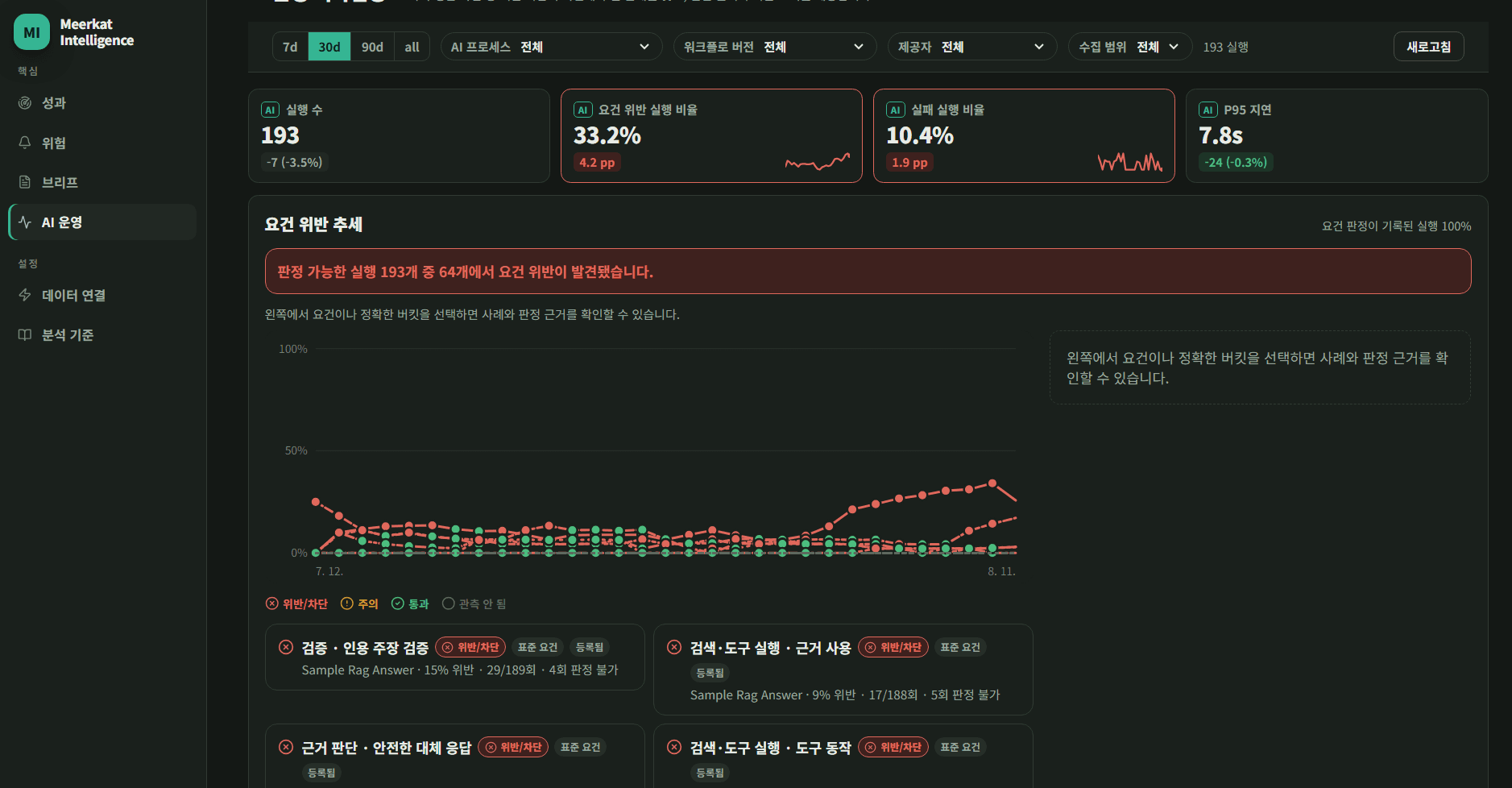
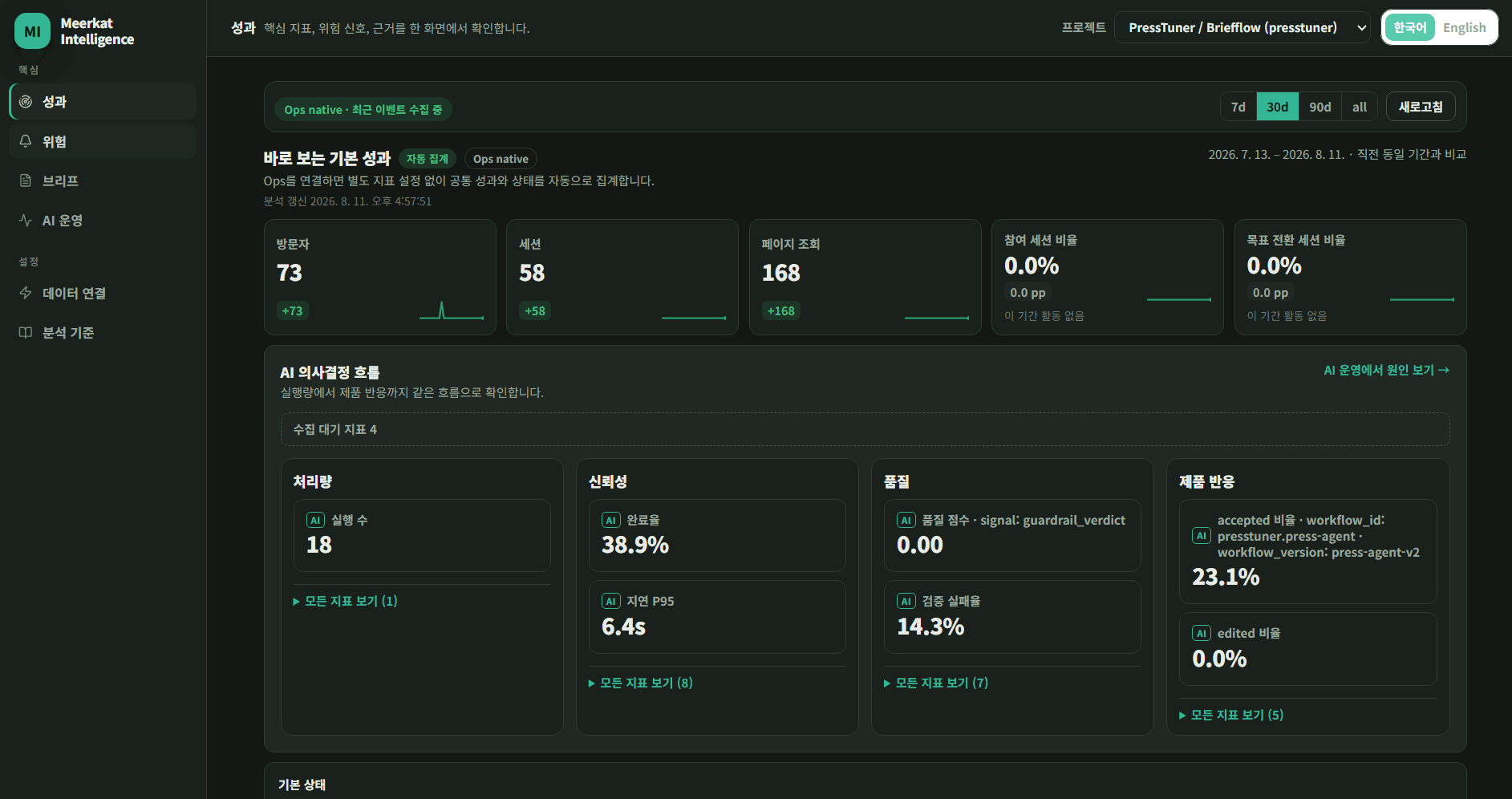
Next.js · TypeScript · PostgreSQL · React Flow · Zod · PostHog · LangSmith

AI workflow analysis · safety rules · change validation

AI Process Console

A console that finds where and why AI work failed, then validates changes without affecting production

Owned scopeWorkflow visualization, error trends, safety and quality checks, before-and-after testing, and PostHog and LangSmith collection

Key outcomes
  • Rebuilt execution records as a flow of work stages and routes
  • Found periods where safety-rule warnings or stops repeatedly occurred
  • Compared current settings with proposed changes without touching production
  • Prepared PostHog and LangSmith collection for future unified site analysis
Upfront design
  • DDD — defined responsibilities for processes, attempts, stages, routes, and requirements
  • Event-driven design — rebuilt overall progress from records emitted by each stage
  • Hexagonal architecture — separated core business rules from UI and storage technology
  • Responsibility split — source projects execute; the console analyzes and requests tests
Troubleshooting
  • Branches and retries duplicated routes → kept every run record but displayed each route once
  • Mixed success criteria distorted results → separated reached, evaluated, and completed populations
  • Reproducing safety-rule failures required live changes → tested copies while preserving the original
  • External metrics looked causal → kept them as supporting signals, not failure verdicts

Measurement scope and limitsThe values shown come from development and regression evaluation. PostHog and LangSmith metrics are collected for future unified site analysis and are not treated as causes of current process state or evidence of conversion impact.

Integrated projects own execution, transitions, and guardrail semantics. AI Process Console reconstructs and aggregates state from emitted fact events, and asks the project's isolated TEST runner to revalidate candidates without mutating production.

Team experience

Professional experience

2026.03 – Present

Team project · Java · JSP · Oracle · JavaScript

Road Weather Information System — maintenance and enhancement

Building new features on a live weather-data system while monitoring collection and aggregation batches for execution state and data integrity.

ResponsibilitiesDesigning logs and processing stages so a live batch failure can be pinpointed

2025.06 – 2025.12

Team project · Java · JSP · Oracle · MyBatis · Vanilla JavaScript · HTML5 · CSS3

KMA Renewable-Energy Weather Support Platform

Built weather-data collection, query, and statistics features plus the web screens and APIs behind renewable-energy operations.

ResponsibilitiesA domain-centered design that applies accumulated weather knowledge to reduce complexity and improve maintainability

View outcomes and problem solving

Owned scopeWeather-data collection, query, and statistics features, with web screens and APIs

Key outcomes

  • Applied accumulated knowledge of weather data and aggregation criteria to the project design
  • Organized core weather data and processing rules around the domain to reduce complexity
  • Clarified layer responsibilities and change boundaries to improve maintainability

Design and problem solving

  • Weather-data rules could scatter across layers → organized the core process around domain concepts
  • Feature growth obscured change impact → separated MVC responsibilities and domain boundaries
  • The processing flow was difficult to follow → made the core process traceable in debug mode
2024.07 – 2025.06

Team project · Java · JSP · Oracle · MyBatis · Vanilla JavaScript

KMA Road Weather Information System — build

Built road-weather aggregation batches and statistics screens full stack, improving SQL, service-layer responsibilities, and shared JSP structure.

ResponsibilitiesSQL optimization · time-series aggregation · service-layer restructuring · shared JSP behavior · frontend state management

View outcomes and problem solving

Owned scopeRequirements · backend and frontend implementation · testing · release support

Key outcomes

  • Reduced an Oracle statistics query from 15–20 seconds to about one second
  • Minute-level source data → 10-minute, hourly, and daily statistics
  • Shared JSP handling and Vanilla JavaScript state helper
  • Requirements · full-stack implementation · testing · release support

Design and problem solving

  • 15–20s query → execution-plan analysis and SQL restructuring → about 1s
  • Collection time ≠ reference time → explicit reference windows
  • Method overloading and mixed responsibilities → service-layer restructuring
  • Inconsistent screen state → shared update sequence
2023.06 – 2024.01

3-person team · Java · Spring Framework · JavaScript · MSSQL

KICT Integrated Management System

Built spatial-data-based facility reservation and training modules, plus the admin features for monitoring operations.

ResponsibilitiesTurning business descriptions into functional specs and digitising manual processes

Index · 0106

Side projects

Products and tools I build, deploy, operate, and maintain using the collaborative practices learned in professional work.

01

SkillBoard

A CLI for managing and controlling AI agent skills across global and project scopes.

2026.07 — nowNode.js · TypeScript · YAML
02

my-systemd

A tiny CLI for finding and grouping the systemd services you created.

2026.07 — nowNode.js · systemd · systemctl
03

AI한테시켜봄

A prompt-sharing site for saving, browsing, and copying AI image prompts with their results.

2026.06 — nowNext.js · TypeScript · Prisma
04

Kamo

A content ops SaaS that turns one product update into multi-channel content packs.

2026.04 — nowNext.js · TypeScript · Prisma
05

Pluid

An AI note app that carries rough capture into summary and next action.

2026.02 — nowNext.js · TypeScript · REST API
06

Meerkat

A Discord operations bot that combines server automation with activity analytics.

2025.06 — nowNode.js · TypeScript · Discord API

Interview guide

Ask me directly

Every question below is answerable from a real implementation choice, tradeoff, and failure mode. Beside each one is the technology decision that holds the answer.

  1. Q01How do you catch paraphrased phrases without missing exact product names or numbers?

    Key decisionI combine vector retrieval and keyword search. Meaning-equivalent phrases are caught with vector search, while exact terms (product names, numbers) are captured with keyword search.

    Validation purposeThe two result sets are fused with RRF, and every final answer keeps selected document chunks as evidence so retrieval and generation can be cross-verified.

  2. Q02How do you find the current writing state and the stage where a problem began?

    Key decisionExplicit state transitions preserve per-stage inputs, outputs, and revisions so the current state and before-and-after process results can be compared.

    Validation purposeAttempt UUIDs, transitions, and checkpoint snapshots are schema-validated and published as immutable run evidence.

  3. Q03How do you determine whether a prompt change actually improved results?

    Key decisionI run baseline and candidate prompts against the same evaluation set.

    Validation purposeI track quality score, cost, and latency together. Even if the average improves, I verify that no specific case regressed. Automated results guide decisions, but a human still approves final changes.

  4. Q04How did you separate AI runtime state from the product's document-writing state?

    Key decisionThe Agents SDK owns model and tool execution, while product state stored through PostgreSQL and Prisma remains the source of truth for the current writing stage and valid transitions.

    Validation purposeEach stage stores its input, output, and status as product data, and the debugger reads that history to expose the current state and where a problem began.

  5. Q05How do you reconstruct a node-edge-node process without guessing from event order?

    Key decisionProjects retain authority over definitions and transition choices; the console projects only observed state from validated past-tense fact events.

    Validation purposeOverview renders only authored nodes and edges as node-edge-node. Repeated events remain distinct occurrences and never create a new transition.

  6. Q06How do you revalidate a guardrail conflict without changing production?

    Key decisionThe console presents a safe state snapshot for the selected node or edge, copies candidate changes, and asks the project-owned TEST runner to revalidate them.

    Validation purposeBaseline and candidate results keep separate identities and compare each guardrail's PASS, WARN, BLOCK, and reason codes. LIVE execution and production mutation remain unavailable.

Contact

If you need an engineer who can explain the judgment between product and code

I can discuss not only what shipped, but why the boundaries exist, which alternatives I rejected, and what I verify in operation.

Open to interviews and coffee chats

Contact by email meerkatstudio.dev@gmail.com

I can walk through the code and the execution records side by side. Name the screen you want to see beforehand if that helps.

All work and engineering evidence
Career — Gyu-hun Im · Full-stack · AI Product Engineer01 / 08

Interview Portfolio · 2026

I use AI,I verify AI,I improve AI.

For three years, I have developed public-sector and weather-data systems, reducing a SQL bottleneck from 15–20 seconds to about one second and designing collection, aggregation, and web features around the weather domain. Building on that experience, I developed AI products that record and verify evidence, stage state, and evaluation results across RAG and tool-calling workflows.

Across team projects and personal products, I have carried work from problem definition to deployment and operations through collaboration and hands-on implementation.

Node.jssystemdsystemctljournalctlnpm CLITypeScriptYAMLCodex/HermesNext.jsPrismaPostgreSQLAuth.jsPostHogOpenAI APIREST APIAndroid IntegrationOpenAI Agents SDKpgvectorRAGDiscord APIRedisReact FlowZodLangSmith
Public-sector and weather-data experience
3+ yrs
Oracle statistics query response
15–20s → about 1s
Integrated observation/aggregation cadence and missing-range handling criteria into batch architecture
Weather domain understanding
Developer career started
2023.05
60-second brief02 / 08

Core competencies

Each competency is shown as a concrete system change. Follow a card to its verifiable evidence.

  • Measuring and eliminating data bottlenecks

    Oracle statistics query, 15–20s to about 1s

    KMA Road Weather Information System
  • Translating domain understanding into implementation architecture

    Domain-centered weather design · lower complexity · better maintainability

    KMA renewable-energy platform
  • Refactoring legacy web applications and improving their structure

    Minute, 10-minute, hourly and daily aggregation; shared JSP structure

    Public data systems
  • Implementing AI execution in a traceable and verifiable structure

    Five-stage transitions · RAG evidence · process debugger

    brieFFlow
Selected evidence · 0103 / 08

2024.07 – 2025.06 · Team project

KMA Road Weather Information System — build

01
KMA Road Weather Information System accident-risk map screen

Java · JSP · Oracle · MyBatis · Vanilla JavaScript

Built road-weather aggregation batches and statistics screens full stack, improving SQL, service-layer responsibilities, and shared JSP structure.

Key outcomes
  • Reduced an Oracle statistics query from 15–20 seconds to about one second
  • Minute-level source data → 10-minute, hourly, and daily statistics
  • Shared JSP table, chart, search, and date handling
  • Vanilla JavaScript screen-state helper
Upfront design
  • Time-series aggregation — separate collection and reference times; explicit windows
  • Service layer — centralized processing and separated layer responsibilities
  • Screen state — one flow for search, reset, refetch, and chart updates
Troubleshooting
  • 15–20s query → execution-plan analysis and SQL restructuring → about 1s
  • Method overloading and mixed responsibilities → service-layer restructuring
  • Repeated screen handling → shared JSP structure and state helper
Selected evidence · 0204 / 08

AI document writing · state modeling · process debugging · 2025.12

brieFFlow

02
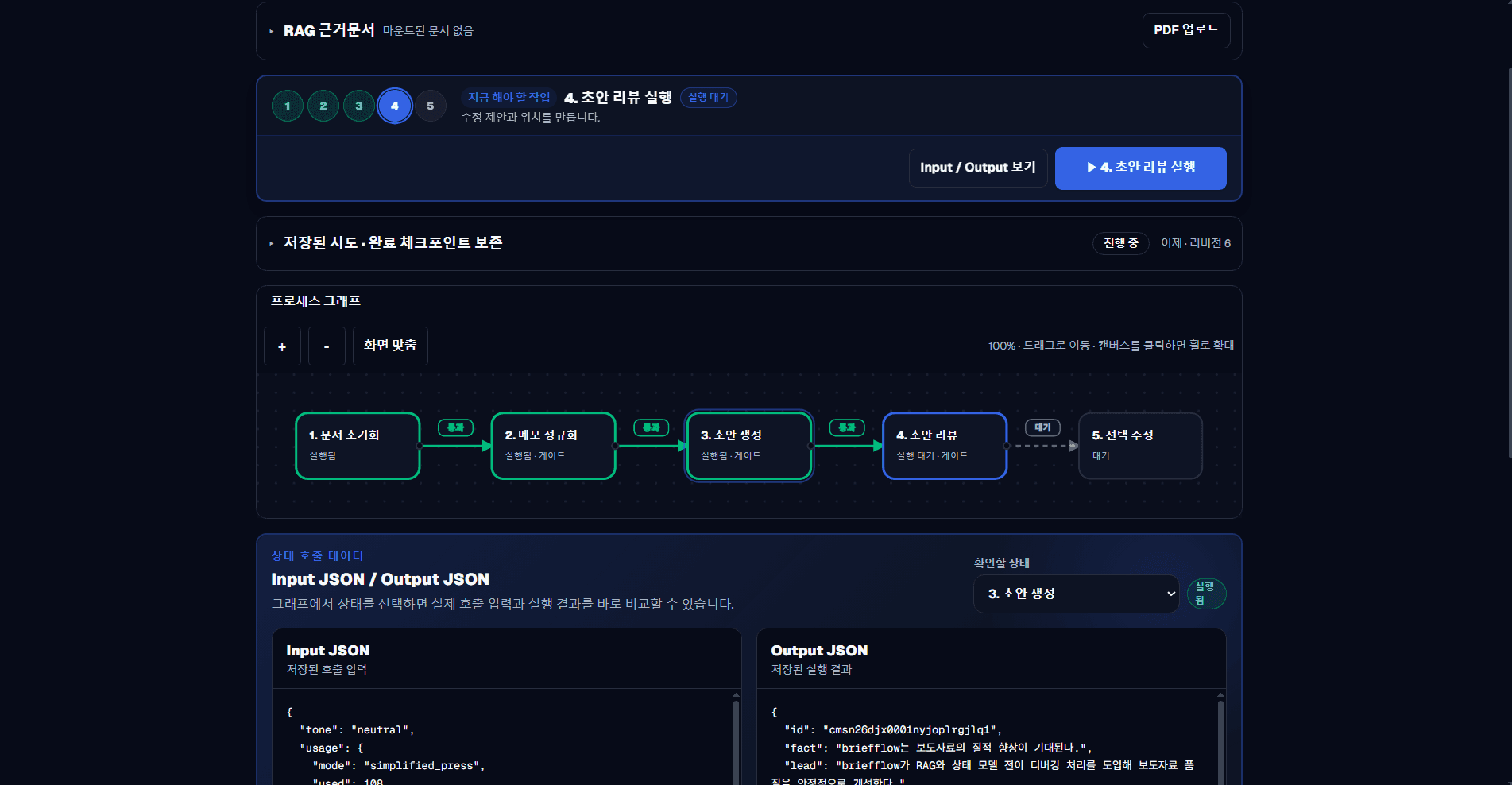
brieFFlow AI run debugger showing brieFFlow press-release stages with input and output JSON

Next.js · OpenAI Agents SDK · PostgreSQL · pgvector · RAG · TypeScript

An AI workspace for grounded press-release generation and quality evaluation.This case focuses on the debugger built to make that writing workflow trustworthy and easier to improve.

An AI writing tool that models the path from rough notes to drafted, reviewed, and revised copy as traceable state transitions

Key outcomes
  • Implemented five AI-assisted stages from note structuring through drafting, review, and selected revision
  • Modeled writing around state transitions so the current state and debugging point stay explicit
  • Used RAG to retrieve and link team-document evidence so critical facts in drafts could be checked
  • Added a checkpoint debugger to inspect failures and compare process changes
Upfront design
  • State model — defined document initialization, note structuring, draft generation, review, and selected revision
  • State transitions — separated each stage's input, output, and conditions for moving forward
  • Human checkpoints — required confirmation of structured notes, generated drafts, and selected review feedback
  • Execution responsibility — let the domain process, rather than UI call order, own current state and valid transitions
Troubleshooting
  • Final output hid the failure point → stored per-stage checkpoints and transition results
  • Drafts could drop critical facts → retrieved and linked team-document evidence with RAG, then checked preservation of numbers, dates, and quotes
  • Process changes were difficult to assess → compared original and changed attempts in the debugger
Selected evidence · 0305 / 08

AI workflow analysis · safety rules · change validation · 2026.07

AI Process Console

03
AI Process Console time-series analysis showing AI run state and guardrail-conflict trends
AI Process Console analysis view presenting product and AI execution metrics as separate evidence

Next.js · TypeScript · PostgreSQL · React Flow · Zod · PostHog · LangSmith

A console that finds where and why AI work failed, then validates changes without affecting production

Key outcomes
  • Rebuilt execution records as a flow of work stages and routes
  • Found periods where safety-rule warnings or stops repeatedly occurred
  • Compared current settings with proposed changes without touching production
  • Prepared PostHog and LangSmith collection for future unified site analysis
Upfront design
  • DDD — defined responsibilities for processes, attempts, stages, routes, and requirements
  • Event-driven design — rebuilt overall progress from records emitted by each stage
  • Hexagonal architecture — separated core business rules from UI and storage technology
  • Responsibility split — source projects execute; the console analyzes and requests tests
Troubleshooting
  • Branches and retries duplicated routes → kept every run record but displayed each route once
  • Mixed success criteria distorted results → separated reached, evaluated, and completed populations
  • Reproducing safety-rule failures required live changes → tested copies while preserving the original
  • External metrics looked causal → kept them as supporting signals, not failure verdicts
Measurement scope and limits

The values shown come from development and regression evaluation. PostHog and LangSmith metrics are collected for future unified site analysis and are not treated as causes of current process state or evidence of conversion impact.

Integrated projects own execution, transitions, and guardrail semantics. AI Process Console reconstructs and aggregates state from emitted fact events, and asks the project's isolated TEST runner to revalidate candidates without mutating production.

Team experience06 / 08

Professional experience

2026.03 – Present

Road Weather Information System — maintenance and enhancement

Building new features on a live weather-data system while monitoring collection and aggregation batches for execution state and data integrity.

Designing logs and processing stages so a live batch failure can be pinpointed

Team project
Java · JSP · Oracle · JavaScript

2025.06 – 2025.12

KMA Renewable-Energy Weather Support Platform

Built weather-data collection, query, and statistics features plus the web screens and APIs behind renewable-energy operations.

A domain-centered design that applies accumulated weather knowledge to reduce complexity and improve maintainability

Team project
Java · JSP · Oracle · MyBatis · Vanilla JavaScript · HTML5 · CSS3

2024.07 – 2025.06

KMA Road Weather Information System — build

Built road-weather aggregation batches and statistics screens full stack, improving SQL, service-layer responsibilities, and shared JSP structure.

SQL optimization · time-series aggregation · service-layer restructuring · shared JSP behavior · frontend state management

Team project
Java · JSP · Oracle · MyBatis · Vanilla JavaScript

2023.06 – 2024.01

KICT Integrated Management System

Built spatial-data-based facility reservation and training modules, plus the admin features for monitoring operations.

Turning business descriptions into functional specs and digitising manual processes

3-person team
Java · Spring Framework · JavaScript · MSSQL

Index · 01—0607 / 08

Side projects

Products and tools I build, deploy, operate, and maintain using the collaborative practices learned in professional work.

01

SkillBoard

A CLI for managing and controlling AI agent skills across global and project scopes.

2026.07 — now
Node.js · TypeScript · YAML
02

my-systemd

A tiny CLI for finding and grouping the systemd services you created.

2026.07 — now
Node.js · systemd · systemctl
03

AI한테시켜봄

A prompt-sharing site for saving, browsing, and copying AI image prompts with their results.

2026.06 — now
Next.js · TypeScript · Prisma
04

Kamo

A content ops SaaS that turns one product update into multi-channel content packs.

2026.04 — now
Next.js · TypeScript · Prisma
05

Pluid

An AI note app that carries rough capture into summary and next action.

2026.02 — now
Next.js · TypeScript · REST API
06

Meerkat

A Discord operations bot that combines server automation with activity analytics.

2025.06 — now
Node.js · TypeScript · Discord API
Contact08 / 08

Open to interviews and coffee chats

If you need an engineer who can explain the judgment between product and code

I can discuss not only what shipped, but why the boundaries exist, which alternatives I rejected, and what I verify in operation.

I can walk through the code and the execution records side by side. Name the screen you want to see beforehand if that helps.

meerkatstudio.dev@gmail.comGyu-hun Im · Full-stack · AI Product Engineer